 Kendo Armour

In Kendo armour is worn to protect the practitioner from injury, with
protection being concentrated on the target areas and the groin. The
current armour developed over time, with first the hands, then the chest,
then the groin and finally the head being covered.
The complete set of bogu (or armour) looks like this...

It is made up of the men which protects the head....
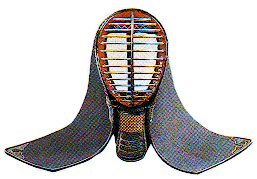
This is made of cotton, with an iron/steel/titanium face grill.
A modern men can be equipped with removable liners to allow easier
drying after use and re-inforcing around the ears to protect the eardrum.
Note the neck guard to protect against the tsuki or thrust to the throat.
Next is the do which protects the chest....

Traditionally the do is made of bamboo slats covered in laquer around
the belly, with leather fittings, but cheaper sets of bogu have a do
of fibreglass or plastic.
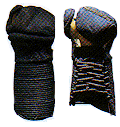
The hands and wrists are protected by the kote, which are padded over
the knuckles and protect the wrist/forarm (the target area) with
compressed / quilted cotton wadding. The palms are traditionally made of smoked
hide, though synthetics are used in cheaper sets.
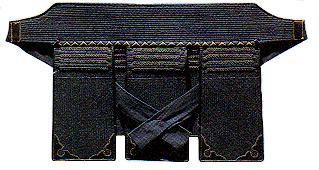
The final component of the bogu is the tare, an apron again made of
compressed / quilted cotton, with five overlapping plates to allow
movement. This is faithful to the kusazuri or protective skirt that
was first seen in the types of samurai armour known as domaru and haramaki,
(with eight sections in the skirt, allowing greater mobility) which
replaced the great armour or oyoroi which had a more solid skirt (with
four sections in the skirt, one for each facing) in the 14th and 15th
centuries.
 © 1996 aden_steinke@uow.edu.au